

One of our healthcare clients had a phone problem that no amount of hiring was going to fix. Patients called to book, the front desk was already on another line, and the call went to voicemail. Some of those people called back. Plenty didn’t.
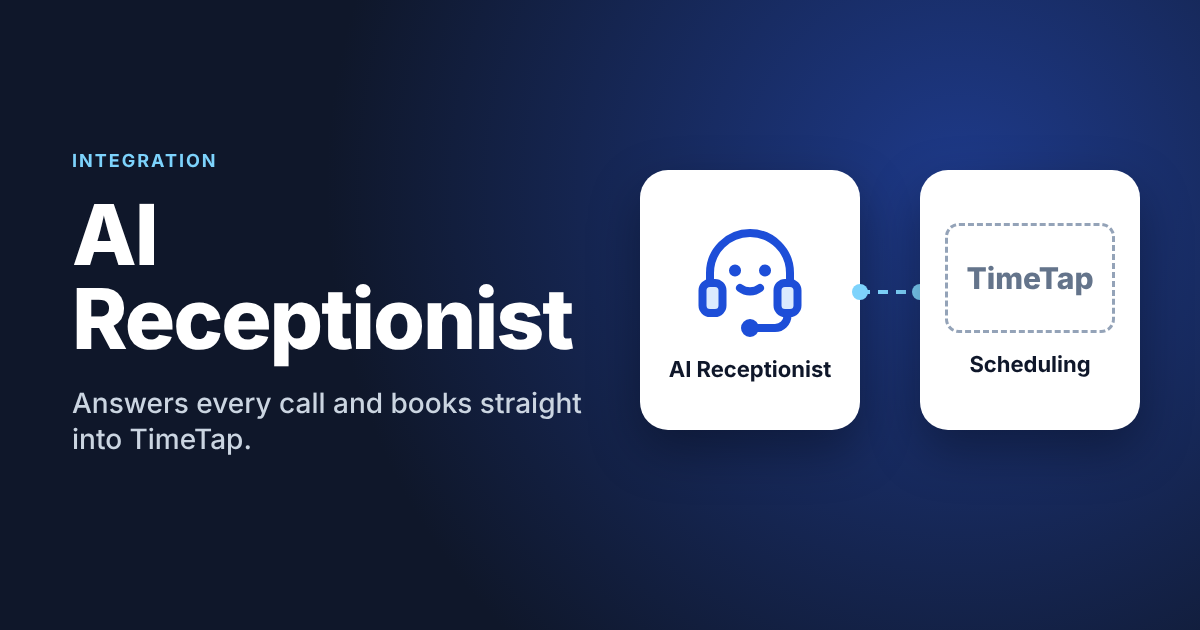
So we built them an AI receptionist that answers every call and books appointments straight into TimeTap, the scheduling system they already use. Here’s how we approached it and what we learned along the way.
Why booking by phone was so hard
This practice has several locations, and its practitioners don’t sit in one place. Each one moves between clinics during the week. One might be at a downtown clinic Monday morning, across town that afternoon, and somewhere else entirely on Thursday.
That makes a simple question like “Can I see someone near me next week?” surprisingly hard to answer. The receptionist has to know who works where, on which day, and what’s still open. Get it wrong and a patient drives to the wrong clinic.
The front desk was handling this well, but it took time on every call. Meanwhile the phone kept ringing. Evenings and weekends were worse, because nobody was there to pick up at all.
What a call sounds like now
Say it’s 8 p.m. and a new patient calls. The AI receptionist picks up on the first ring and asks which part of the city they’re in. It suggests the closest clinics, tells them which practitioners work there, and reads out the next open times. The caller picks one, gives their details, and the appointment lands in TimeTap before they hang up.
Existing patients get the same treatment. Someone who needs to move Tuesday’s appointment says so, the receptionist finds their booking, offers a few new times with the same practitioner, and makes the change. Cancelling works the same way.
Because it reads the practice’s live schedule in TimeTap, it only offers times that actually exist. If a practitioner’s hours change, the receptionist knows straight away. Nobody has to update a second system.
And when a caller asks something it shouldn’t answer, like a medical question, it doesn’t guess. It offers a callback or passes the call to a person.
How we approached the build
We didn’t start with the AI. We started with the schedule. Before a single test call, we made sure every clinic, practitioner and working hour was set up correctly in a separate test copy of the client’s TimeTap account. That let us try real bookings, reschedules and cancellations without ever touching a real patient’s appointment.
Privacy shaped a lot of our decisions. Patient details stay in TimeTap, where they already lived. Nothing about callers is kept anywhere else, and the test account never held real patient information.
We also wrote the receptionist’s script with the front desk, not around them. They told us what patients usually ask, which questions need a human, and how they like bookings confirmed. That’s why it sounds like their clinic and not a generic phone bot.
What changes for the practice
The biggest change is simple: every call gets answered, including the ones at 7 a.m. and on Sunday afternoon. Patients who would have hung up on voicemail now leave with an appointment.
The front desk gets time back too. Routine bookings and reschedules no longer fill their day, so they can focus on the patients standing in front of them and the calls that genuinely need a person.
Could this work for your business?
If your team books by phone and your staff split their time across locations, you’re probably losing calls you never hear about. The same goes for any business where the schedule changes day to day and only a person who knows it well can book correctly.
We built this on TimeTap, but the same approach works with most booking systems and business software. See how we connect AI to the tools you already use, or read more about the AI agents we build to answer calls and handle routine work for your team.
Wondering if an AI receptionist makes sense for you? Get in touch and we’ll walk you through it.